Alongside my colleague Malcolm McLaughlin, I spoke about our work on the Great Yarmouth Hippodrome at a Seaside Heritage Network event - recording below...

Friday, January 19, 2024

Wednesday, January 10, 2024
'Twas the Night Before Christmas: The Economist
I've been quoted in this article from The Economist about the 200th anniversary of "A Visit from St. Nicholas":


Comparative American Studies: Christmas Special
I've guest edited a special Christmas-themed double-issue of Comparative American Studies featuring a host of excellent articles which reshape our understanding of the place of the holiday in American life and culture and beyond. Available here (plenty of open access too...). Table of contents below.


Friday, December 01, 2023
The Last Gift: LSUP Online Author Series
I gave a talk about The Last Gift for LSUP's Online Author Series - video below!
Saturday, November 25, 2023
She learned all their secrets: The story of Anna Sewell and Black Beauty
Yesterday was the launch event for the new edition of Black Beauty that I've edited - a collaboration with the wonderful Redwings Horse Sanctuary. It was also the premiere of an another exciting aspect of this project: an animation about the life and legacy of Anna Sewell and her famous book - narrated by Dame Joanna Lumley. Enjoy below!
Thursday, October 26, 2023
A Juvenile Miscellany: An Anthology of Lydia Maria Child's Writing for Children
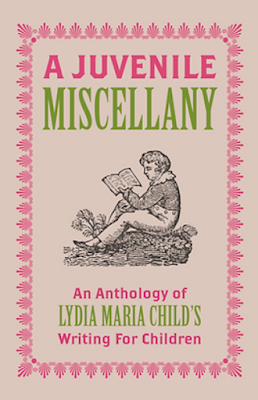
"This splendid anthology of Lydia Maria Child’s writings for juveniles is a major publishing event that represents American Studies at its best. The product of an inspiring collaboration between the scholarly editors and their students in the field, the book reprints for the first time a wide range of texts covering all the subjects about which Child sought to educate her youthful readers—relations between indigenous peoples and white settlers; race, enslavement, and abolition; history and revolution; the natural world; and work, wealth, and poverty. The anthology’s superb introduction not only highlights Child‘s role in creating an American children’s literature and influencing later practitioners of the genre but offers insightful interpretations of key texts. Altogether a remarkable achievement."
Carolyn L. Karcher, author The First Woman in the Republic: A Cultural Biography of Lydia Maria Child
"A Juvenile Miscellany, a beautifully edited collection of Lydia Maria Child's children's literature, is a joy to read. The selected stories are lively and evocative; together, they provide irrefutable evidence of Child's genius as a pioneering American children's author. The editors' introduction contextualizes the stories in Child's wider career as a radical abolitionist and reformer, confirming her status as a major nineteenth-century intellectual with much still to teach us today. "
Lydia Moland, author of Lydia Maria Child: A Radical American Life
"A Juvenile Miscellany: An Anthology of Lydia Maria Child’s Writing for Children is a milestone in the author’s recovery. Offering an abundant selection of the author’s work on various social justice causes, as well as key texts on the natural world, this generous collection represents Child brilliantly as an activist and a citizen. It is exactly the book I have been wanting."
Karen Kilcup, Elizabeth Rosenthal Excellence Professor at UNC Greensboro and author of Stronger, Truer, Bolder: American Children's Writing, Nature, and the Environment
And we were interviewed for the Lydia Maria Child Newsletter - some screenshots here!


Full description below!
Circus at the Seaside: Building the Great Yarmouth Hippodrome, 1903 - Coastal Studies & Society

Over the last few months, with my colleague Malcolm McLaughlin, I've started a new research project on the history of the Great Yarmouth Hippodrome and circus at the seaside. Our first article, "Circus at the Seaside: Building the Great Yarmouth Hippodrome, 1903", has just been published open access in Coastal Studies & Society. Available here. Abstract below...
Thursday, July 27, 2023
A Christmas Carol In Nineteenth-Century America, 1844-1870 - Comparative American Studies
 |
| Sol Eytinge's illustration of the three spirits visiting Scrooge in Charles Dickens's A Christmas Carol, taken from the 1868 Ticknor and Fields American edition. |
Excited to say that my article on the tumultuous Transatlantic reception of Charles Dickens's A Christmas Carol, 1844-1870, has just been published open access in Comparative American Studies. You can read it for free here. Abstract below...
Thursday, April 27, 2023
The Last Gift: The Christmas Stories of Mary E. Wilkins Freeman


Coming this October from Louisiana State University Press! This is the first anthology of Mary E. Wilkins Freeman's extensive and neglected holiday writings—including one previously lost story! Here's the official blurb:
Mary E. Wilkins Freeman (1852–1930) was one of the most popular American writers at the turn of the twentieth century, and her annual Christmas stories appeared in magazines and periodicals across the globe. Since then, the extraordinary stories that once delighted her legions of fans every festive season have gone largely out of print and unread. Now, for the first time, The Last Gift presents a collection of Freeman’s best Christmas writing, introducing these funny, poignant, provocative, and surprisingly timely holiday tales to a new generation of readers.
Here's the catalog copy:

And here's some advance praise from some wonderful Freeman experts!
“Thomas Ruys Smith’s edition of Freeman’s Christmas stories is a revelation! All our presumptions about holiday stories being drenched in sentimentality are demolished by the ways in which Freeman probes the multiple meanings inherent in the acts of giving and receiving gifts and exposes the forms of both solitude and communion inherent in Christmas. This collection transforms our understanding of the season and enhances the literary reputation of this remarkable author.”—Alfred Bendixen, executive director of the American Literature Association
“A lovely and varied collection of Freeman’s often-neglected Christmas stories. Smith’s lively introduction contextualizes Freeman’s portrayal of the holiday season, in all of its complexity, and the domestic tensions that Christmas evoked for nineteenth-century women.”—Leah Blatt Glasser, author of In a Closet Hidden: The Life and Work of Mary E. Wilkins Freeman
“The Last Gift will prove anyone wrong who once said with Mark Twain, ‘I hate Xmas stories.’ Funny and grave, delicate and ironical, Freeman’s Christmas stories talk about old age and queer desires, ecoanxiety and the love of trees, class tension, capitalistic drives, and the beauty of an old child braving it all to have her ‘Christmas once.’ A gift for all, and for all seasons.”—Cécile Roudeau, coeditor of New Perspectives on Mary E. Wilkins Freeman: Reading with and against the Grain
“Celebrated in her own time not only as a New England regionalist but also as writer of popular Christmas stories, Mary E. Wilkins Freeman challenged the genre's sentimental limits by questioning the relationships between charity and obligation, theft and gift, and transgression and redemption which her characters experience at Christmas. As Thomas Ruys Smith argues in his excellent, lively, and comprehensive introduction to these twenty-five stories, some published for the first time since their original appearance, Freeman's unjustly neglected Christmas stories reveal a new understanding both of the genre's significance and of Freeman's career as a professional writer.”—Donna Campbell, author of Bitter Tastes: Literary Naturalism and Early Cinema in American Women’s Writing.
“Finally, a volume that reprints Freeman’s Christmas fare. Freeman’s Christmas stories are inventive and experimental, emphasizing the emotional and practical complexities of the holiday, with profound implications for gendered labour, class inequality, the building of community, and the pleasures and perils of consumption. The impressive introduction frames the stories within the history of the holiday and Freeman’s delight in its intrigue.”—Stephanie Palmer, co-editor of New Perspectives on Mary E. Wilkins Freeman: Reading with and against the Grain
Looking forward to reintroducing these stories to a new host of readers this Christmas! More info here, and you can pre-order both ebook and paperback from Amazon here.
River of Dreams: Imagining the Mississippi Before Mark Twain - now in paperback!

Subscribe to:
Posts (Atom)